Tag: essay


  • To Teach or Not to Teach Artificial Intelligence

    To Teach or Not to Teach Artificial Intelligence

    While watching academic (and non-technical) environments, I’m beginning to see that the pervasive instinct is to ban AI in writing and artwork curriculum. The argument is that students will use it to facilitate cheating, or it’s use will “cheapen” the learning of the artform.

    But increasingly, I worry that this approach will not prepare the next generation for the true world they are about to enter. Can we open the debate in a way that best helps the students, and limits the potential for academic dishonesty?


    Watching AI Enter the Animation Pipeline

    I spent 20 years as a professional animator. My passion is both story but also the technical implementation of it’s use in real time technology. That is, I really love making characters move in video game worlds.

    The satisfaction comes from the knowledge of complex systems, storytelling, and the final result of days and days of labor coming to fruition. I bring something that was seemly dead, to life. I do it, with an extraordinary amount of labor, skill, research, iteration… and often, the emotional pain of fighting my self doubt.

    Above you can see a screen capture of my desktop. I am currently animating (experimenting) with the Unreal Engine’s “Manny”, in Autodesk Maya. That means I move and set the position of the arms by keying. Me, a human.

    Since I derive so much personal value from the process, it was especially difficult for me to deal with the idea of automation, when I first discovered machine learning on a motion capture stage several years ago.

    Machine learning is the term for a class of mathematical models within the field of Artificial Intelligence. They are having a sort-of “golden age” of development. Training a machine learning model to move a face of a character, or to automate the rigging of a digital skeleton can drastically reduce the labor involved (in some cases by a factor of 100).

    As these models have matured, more and more of the pipeline is becoming automated. Below you can see one of the more impressive workflows called Learned Motion Matching. This alone, will drastically reduce the up-front creation time of video game character controllers.

    Source: https://montreal.ubisoft.com/en/introducing-learned-motion-matching/

    I remember a sleepless night where my stomach physically hurt as I came to the realization that AI had the potential to remove the need for animators themselves. (I wrote about it back then) I soon decided this was a problem that I needed to frame as Scottish philosopher David Hume articulates the “Is” vs. “Ought” problem.

    I was resisting the understanding of artificial intelligence because I was clinging to what I thought ought to be. Artists ought to be the drivers of the labor. Creativity ought to be part of the emotional struggles of the individual. Not a data set. Right?
    Only when I began to confront what AI is, was I able to begin to research and understand it.

    This is where we are at.

    So then, what AI is…

    AI is reaching a level of (highly) functional use for artist workflows in animation, music, editing, visual effects, illustration and many others. It’s being deployed in our software for everyday use. AI image making models are reaching critical mass now, because of the prolific sharing ability of the internet.

    Because of the nature of our digital world — we have larger and larger datasets, and the training of models are becoming more accurate and robust.


    Predictive systems will finish our work for us in the art we create, and it will understand not just how to animate, but our “intents” as the animator using it. We are at the cusp of creating a productivity boom unlike human kind has ever seen.

    Some examples from this past summers experimentation with stable diffusion.

    The challenge in the near future, is not with the mathematical models, or even the datasets that are being collected. These are nearing an astounding level of image fidelity. The challenge is the interface design and the UX — the accessibility to the non-coding masses.

    Many, *many* software companies are rushing to create this accessibility through new interfaces, plug ins, and automated things we don’t even notice. “Old Guard,” like Adobe, are seeming to keep pace by buying up new talent. But there is a sizable crop of generative start ups who are targeting other graphics markets. The focus, driven by capitalist desire, is mass adoption. This leads to facilitation of use, and exponential data collection.

    NVIDIA is now training AI agents “for decades” in real time simulated environments.

    But capitalism isn’t the only driver. Stable Diffusion, a popular clip-diffusion image maker, released themselves open source. Within days, new innovations were in google collabs around the world. I suggest searching the #stablediffusion tag on twitter and marveling at an endless stream of un-bundled experimentation. The acceleration of AI is not just driving the market economy, it is inventing the distributed licensed one as well.

    Can it be Avoided?

    Students can actively choose a variety of new applications to automate the writing of their essays (or even the accompanying illustrations!)

    Increasingly, that choice will be removed from them.

    The way that email checks your spelling and updates as you’d write, our software will make intuitive predictions about what we’re creating. It will make predictions and create elements for us, all in real time. I expect it just to be the default in photoshop, visual studio, word, and many others. The AI will just be there.

    AI is here. It can make renaissance paintings of power rangers.

    It can not be avoided or banned.

    Renaissance Artist Painting Power Ranger – Stable Diffusion.

    My Suggestions

    Here are my three suggestions of how you, as a teacher, can integrate it into your classroom. But most of all, you should reinforce your human connection to your students.

    I. Communicate


    Talk about it openly and honestly with your students. If you’re scared, tell them that you’re scared. If you are concerned about cheating or the way it’s being used — be honest about it. Be vulnerable about it.


    Opening honest debate allows for the many, many shades of “grey area” that might happen should a student turn in work. Banning it is fine, but you need to be deliberate about it’s name and function.

    You can’t say “no AI.”

    You will need to be specific: “No Clip-diffusion enhancement for this exercise today.”

    The debate needs to be open should issues arises regardless whether the student is intentionally cheating or the software has ambitiously finished it for them.

    One of my many many failed generative experiments, Science Fiction Alien Mech, Combat Technology, Disco Diffusion

    II. Understanding


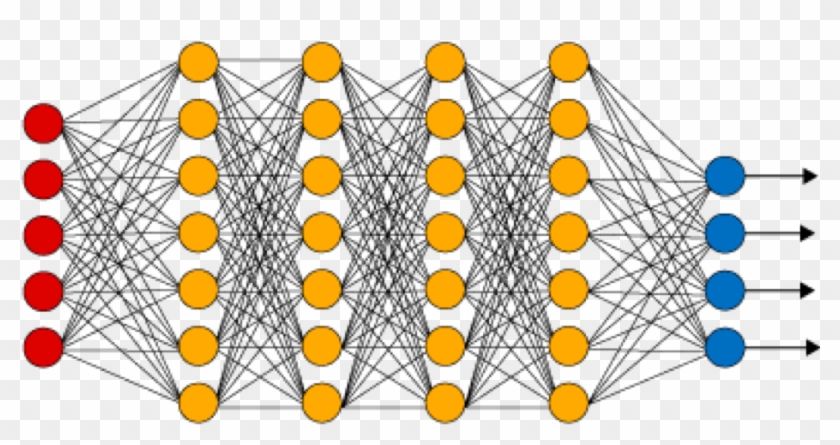
    We need to have a common understanding about the the types of models. Artificial Intelligence is divided into classifications like neural networks, GANs, Language Models, Clip-Diffusion, etc. Students should understand the difference between what it means to train a neural network and how an agent is trained in reinforcement learning.

    Different applications of machine learning and artificial intelligence will propagate into different verticals. Depending on what your subject matter, certain models and architectures will fit better than others. As an animator, my primary focus is motion models. Those might not be as interesting to a writer who is being rewritten with language models.

    Students should have a sense about what AI is actually doing, not as some “magic thing” operating in the background. For each model, there are always a specific set of inputs and a resultant set of outputs. Even without a computer science or mathematics background, the classification of models is learnable at a simple level.

    For help with this, I recommend Melanie Mitchell’s book : “Artificial intelligence: A guide to thinking humans” This high school level book clearly explains the categories of AI, and offers non-technical and direct explanations of the operations of them. (link to amazon is below)

    Audrey Hepburn, Black and White, Art Wall Painting, Stable Diffusion. I spent a late night session generating black and white images of hollywood.

    III. Compassion


    The last thing is to approach your students with compassion. You must understand that these students are already interacting with extremely powerful algorithms. Their content stream from Tik Tok is being algorithmically constructed and tuned to their emotional impulses. They may think they are simply texting with friends, but they are already being gamed into large datasets.

    These processes have been reinforced by their social networks amongst their friends. Understanding their position and their actions, may increasingly become more difficult.

    To us, we will marvel as things start to be completed for us. For them, it will be normal. I think the youth should learn to count before getting a calculator, and I think the youth would appreciate concepts like voice models or latent space before they’re everywhere.


    Clearly, I have a big concern about our adoption of artificial intelligence. I’ve accepted the technology will be here, just as electricity or the internet simply arrived. I hope we as teachers can openly learn to accept it’s presence in our curriculum. We should learn to use it, but speak openly about it’s ethics.

    I hope you will take a moment to do your own research on this before coming to conclusions.

    Regardless of whether this line of thinking is fantastical or 100% correct, I understand this to be a contentious issue. I welcome open debate, as we should all participate to figure this out together.

    Thanks for Reading.

    Reference:

    Here is the link to Melanie Mitchell’s Artificial Intelligence: A Guide for Thinking Humans

    I might also recommend:

    Two Minute Papers: https://www.youtube.com/c/K%C3%A1rolyZsolnai

    Superintelligence, by Nick Bostrom: https://www.powells.com/book/superintelligence-paths-dangers-strategies-9780199678112

    Machine Learning for Art: https://ml4a.net/


  • The Democratization of Animation Production

    Imagine the hundreds of people that a computer graphics animated feature requires.(Think: Pixar or a VFX heavy superhero blockbuster.)

    Now imagine the entire undertaking of these projects being done by a handful of people. Instead of a pipeline of specialized workers, this handful of people are unique multi-talented “librarians.” Like DJ’s who sample electronic music, animated storytelling will mix streams of data, creating visualizations for a variety of new platforms.


    Hypothesis:

    Computer Graphics Production – as it exists in the movie business – will be disrupted by peer based, real time networks.


    Increasingly, collectives of creative developers are sharing new ideas, code and work flows. By sharing powerful tools and know-how, communities are growing at a pace that will soon outperform the quality and market need of closed systems. Essentially, the open networks will outperform the closed companies. The advances of these creative networks will make the computer graphics artists that work within it, mind-boggling, productive.

    Most interesting to me, is that visualizations might not be rendered on a centralized farm of computers, but by an infinitely scalable, distributed network. The libraries, the labor and the processing power will be shared by all who participate. The more who join in, the more powerful the network will become.

    This is enormously exciting for the art form. The way Youtube empowered content creators, and Instagram made everyone a photographer, new networked technologies will democratize and enhance the animation storytelling process for anyone with an internet connection. Admittedly, it is also threatening to those who exist in the industry today.


    This is what my research and writing has been focused on for the last year. I’ve spent this time exploring engines and new workflows, playing with ways to develop content, and then writing my thoughts over and over. I want to understand this evolution.


    The best way for me to internalize my learning is to write about it, teach it, and share it. And so, it is my hope that the self imposed pressure of a weekly newsletter will keep me diligent on these explorations.

    Every week, I will write a new post discussing my thoughts on technology like game engines, distributed networks, machine learning, agile storytelling, but most importantly, the evolution of the networked artist.

    If you are a computer graphics artist, producer, student, or thinker, I welcome you to subscribe and join in. If you feel this is useful, please pass it on to others who you feel it will be useful to.

    [convertkit form=3045399]


  • Keys & State Machines

    Design patterns for character animation are about to get really complex

    Story Telling Moments

    Character animation is hard. And with real time systems, it’s going to get a lot harder.

    In order to plan through the creation of a character’s performance, an animator uses design strategies to construct the motion. Since the days of Walt Disney and his nine old men, animators have relied on a method of quantifying the actions of characters into story telling moments. These moments are often referred to as “Keys.”

    By drawing a handful of story moments and then “popping” between them, the animator can explore the timing and readability of the shot. Below is an example from Richard William’s Animator Survival Kit, showing the key drawings of a character walking to a chalkboard and starting to write. The story of the performance can be conveyed in three simple moments.

    It’s sometimes very difficult to determine these keys. Realizing this difficulty and then the energy required to flesh out the action, it’s astounding that we only use the sequence of frames once. Entire movies (which are massive undertakings) are animated once, and then thrown away! The energy the animator puts in is equivalent to the visible experience they get out of it.

    This linear output looks something like this:

    While the art form in this sequential logic form is beautiful, it is highly inefficient.

    In a real time system, such as that in an engine, the character’s actions are reusable. These actions can be changed based on the dynamic nature of the environment. Simply thinking of a character in terms of linear keys is too limiting. We need a way to quantify a character performance in a way beyond it’s single use.

    Finite State Machines

    state machine is a mathematical design pattern where an entity exists in bracketed conceptual moments, called “states.”  States are an architecture that allow for a predetermined series of actions to be triggered, provided conditions are met.

    For example, a character entity in an engine may be in a state of “walking” until it is confronted with a street to cross, to which it will change it’s state to “wait for the light.” States aren’t just visibly physical, like walking or jumping. Characters can be in a state of hunger, or in a state of anger, or in a state of existential crisis. When you begin to imagine states for characters, you start to understand how a character performs in a way outside of linear time. Designing keys in this mindset might look something more like this:


    Video games already do this in a limited capacity to satisfy the requirements of a character’s action during game play. A character will begin in an “idle state” and when the user input commands it to run left, it will change it’s state to “run left.” By changing it’s state, the engine knows to play an animation clip of the character running to the left.

    Increasingly, game engines are providing UI systems that allow for the development and design of character state machines. The example below is taken from Unity’s state machine which allows you to import animation clips and arrange them into a pattern that triggers at run time.

    My hunch is that, as real time systems become more and more integral to the animation production process, character work will increasingly become reliant on the development of complex state machines. These massive state machines will not only drive the actions of the character, but the motivational nature of them as well.

    Thanks for Reading. See you next week!

    Here are some references to keep you going on Animation Keys and State Machines.

    The Animator’s Survival Kit by Richard Willliams:

    https://www.amazon.com/Animators-Survival-Kit-Richard-Williams/dp/0571202284

    Game Programming Patterns by Robert Nystrom on State Machines:
    https://gameprogrammingpatterns.com/state.html

    Unity’s Documentation on State Machines:

    https://docs.unity3d.com/Manual/StateMachineBasics.html

    Unreal’s Documentation on Animation Blueprints:

    https://docs.unrealengine.com/en-US/Engine/Animation/AnimBlueprints/index.html


    I began this newsletter to begin a conversation with the computer graphics industry. Should you have thoughts or comments, please feel free to reach out. I can be found on twitter @nyewarburton.


  • Optimization & Leverage

    Optimization & Leverage

    Real Time animation production should start with a change in mindset

    Computer graphics can make gorgeous, high resolution stuff. However, that isn’t always the point.

    The graphics of the game industry evolved on a parallel track to the 3d techniques of the movie business. Instead of focusing entirely on high resolution images for the screen, they focused on reusing things, packing them, and limiting the color palettes. In order to play in real time, the content needed to be optimized. Because of this focus, games have always been looked at as less graphically impressive.

    That’s because most in the movie industry don’t understand the real art of game design.

    Instead of thinking:

    “How do I make this really high quality?”

    Start thinking:

    “What’s the most efficient thing I can build to get the most use out of it?”

    A Space Chicken Showed me the Way

    In 2012, I was an animator, but a novice game designer. After three failed attempts at building a mobile game, I decided to simplify my learning process and rip off what everyone else was doing at that time — build an endless runner.

    Roping in some development help, the result was Commander cluck, a demo of a running and jumping space chicken, that had a single touch mechanic. This was a triumph for me as my first game that actually worked. What threw me about the development process however, was learning and seeing the potential of something called procedural generation.

    I had started to write unique levels out but, after watching the talks and readings from the independent gaming world, I decided to try something new.

    I divided a level into seven “chunks” of content. I made a single level with seven variable chunks. I made four different background sets of pieces. Then, I tied the content variables and the speed into the performance of the player. At run time, the chunks were randomly selected and placed based on the changing variables.

    The result was a game that generated it’s levels and dynamically adjusted the difficulty.

    A fairly simple thing to uncover for most college level game developers, but for me it was like figuring out my first animated walk cycle. I remember my mind exploding at the possibilities.

    Because of this odd space chicken game, I had learned the value of reusing things mathematically.

    Leverage to Infinity and Beyond

    Engines are collections of work flows (tools) and reusable elements (assets) that the game industry has standardized to leverage these kind of opportunities. Every engine comes with the ability to generate levels, set up UI, create a player controller and many have things like gravity, starter templates, or scoring systems.

    All of these developments allow you to get up to speed and experiment with the game content much faster. As you continue to develop your processes, engines allow you to build more tools for duplicating work, offsetting it, and (most importantly) enhancing it. The better the infrastructure below you gets, the more you can improvise faster.

    Experimenting with content in engines is about efficiently leveraging optimized content. This is the genesis of creating compelling procedurally generated content. A subject I will be speaking about in length on this Nytrogen newsletter.

    Animators should begin to internalize the optimization & leverage mindset and not think of an animated story as a linear progression, but a collection of animated pieces. These pieces can be reused and assembled in mathematical ways that I’ll soon be discussing right here.

    Thanks for reading. See you next week.

    Some reading on:

    Dynamic Difficulty Adjustment: https://www.hindawi.com/journals/ahci/2018/5681652/

    Procedural Generation: https://thenewstack.io/new-crop-games-built-procedurally-generated-universes/

    and a 10 year old blog post about randomness in games –

    https://boingboing.net/2009/10/12/my-generation-how-in.html

    I began this newsletter to begin a conversation with the computer graphics industry. Should you have thoughts or comments, please feel free to reach out. I can be found on twitter @nyewarburton.


  • The Ants Go Marching Open Source

    The Ants Go Marching Open Source

    The surprising effects of open source computer graphics development

    Ever Knock Over an Ant Hill?

    I’d like to bring up a comedy routine from one of my favorites, Brian Regan.

    Do you ever knock over an ant hill? Ever notice how they just start building it again?

    You’d think there would be at least one of the ants who’d go:

    “OH MAN!!!!! I DON’T BELIEVE THIS!!!!!”

    We are that one angry ant and that’s why it’s funny. We care about the things we build, and we get upset when someone knocks the whole thing down. Ant behavior seems counter to who we are. Instead of a single controlling interest, a collective hive mind just builds, without any drive but the creation of the ant hill itself.

    I think this is the perfect analogy to think about open source. Brian Regan is also hilarious.

    Open source?

    In my day job, I use pretty fancy pieces of software to do computer graphics. These days, it’s mainly Autodesk’s Maya, Adobe’s After Effects, and the super duper Unreal Engine from Epic. I’m amazed at the advances these pieces of software have every year.

    However, when a community rallies around a free piece of software, the effects can be even more astounding.

    Blender is an open source 3D package and production suite which, for free, allows for the creation of models, rigs, animation, textures, compositing and editing! Every major part of the animation pipeline has an independent group of developers solving a critical production problem. The community also shares videos about how to build things, provide plug ins and updates, and contribute to an infinite amount of chat rooms, websites and documentation.

    Projects like Blender, the Godot engine, Open Broadcast Software, and the painting application Krita, are part of a growing world of open source computer graphics software. Essentially, a quality graphics pipeline can be created with software that have no licenses.

    At it’s core, open source projects stay independent and free, which allows others to adopt it more readily. When community pain points are discovered, the users themselves can simply take it upon themselves to fix it.

    This is key.

    See, if I want an update to the Unreal Engine, I have to wait for the developer, Epic, to get around to it. (Here’s the Roadmap: https://trello.com/b/TTAVI7Ny/ue4-roadmap) Even if there are 100’s of world class developers working on the problem, because the system is closed there are only a (relatively) few number of people working on it.

    • I have been informed by an Ureal expert that the above is not true. Unreal provides a semi-open source license which allows for opportunities for non-Epic developers to contribute to the code.
    • k. Back to the Rambles.

    For an open source project that I use, there are usually communities working on the same problem sets I have. The bigger and more active that community becomes, the more powerful the tool becomes. The users aren’t boxed out of the development in order to be monetized. The users (and the knowledge they have) become part of the development process itself.

    Below is a visualization of python. You can see how the development of it twists and turns with the needs of the community. What closed company development pipeline would ever create a library like this?

    Open Source for the Ecosystem

    For the time being, the software packages and systems I use in my graphics work are closed. I work in companies, and business models are tied to a mechanism to control scarcity. Most software focused companies will continue to license, use subscriptions or SASS, because that’s how you make 20th century money.

    What I wonder is:

    How long will these closed systems be able to maintain their lead on the rest of the pack?

    How can a localized graphics pipeline compete with an infinite group of user/developers and an ever increasing collection of models, animation and art? Yes, it’s true, that perhaps that our graphics ecosystem will be controlled by Epic, or a titan like Amazon, or Microsoft Azure.

    It also may also be possible that that people will want a free ecosystem, filled with free software, and the value will come from the singular hive mind that is set on building with it.

    Thanks for reading. We’ll see you next week.

    Reference and Links:

    Software –

    Autodesk Maya: http://autodesk.com

    Adobe After Effects: http://adobe.com

    Epic Unreal Engine: http://unrealengine.com

    Blender: http://blender.org

    Godot: http://godotengine.org

    OBS: https://obsproject.com/

    Krita: https://krita.org/en/

    Reading –

    Yokai Benkler, The Wealth of Networks: http://www.benkler.org/Benkler_Wealth_Of_Networks.pdf

    The Agile Manifesto: http://agilemanifesto.org/

    Comedy –

    Brian Regan Official Site: http://brianregan.com/

    And I found his “Ant” routine here: http://inviewmedia.org/index.php/media-gallery/1408-brian-regan-ants-fishing?category_id=12


  • The Five Rules of Genghis Kahn

    Upon recommendation, I added Jack Weatherford’s “Ghenghis Kahn and the Making of the Modern World” to my summer reading list.

    In short, I devoured it. Genghis Kahn was a singular genius.

    Never have I enjoyed a strategy book quite like this one, and it inspired me to reflect. Below, I distilled what I saw as Gheghis Kahn’s Five Rules of Conquest… because one never knows when they will need to efficiently conquer all of Asia.

    Rule One: Recruit Ability Not Inheritance

    Armies in the 12 century, both tribal and aristocratic, recruited based on family ties. If you were a clan on the steppe, you trusted your brother to join you. In aristocracy, only sons of royalty could run armies. It was pretty tough for an outsider without blood relations to rise in the ranks.

    Kahn created a conceptual brotherhood out of skilled alliances. Productivity, not blood relation, was the metric. By devising ceremonies where non-related warriors could become “blood brothers,” Kahn created a mechanism where he could befriend the best, and have them swear devotion.

    To secure this ceremonial brotherhood, he developed a rev share, where the most loyal raiders would get a take from a conquest. If a member died in battle, Kahn compensated their widow and child. The brotherhood was effectively a prototype for workers comp and life insurance.

    As opposed to the leadership of the royal armies who cared none for the the rank and file, every Mongolian soldier was part of Genghis Kahn’s elite family.

    Also of note; aristocrats tended to hold each other captive (and alive) after battles. They gave each other a form of specialized “rich person” treatment. Kahn was especially antagonistic to this mentality. He never wore fancy clothes, abstained from anything remotely like royalty, and ruthlessly axed anyone who he felt was bestowed an aristocratic title.

    Rule Two: Its the Loot, Not the Kills

    Genghis Kahn was a glorified thief turned conqueror. He was in it for the loot. He was not driven by a concept of honor, and he rejected most of the aristocratic ideals of chivalry. If Genghis Kahn could have knocked over a city without killing anyone, he would have.

    Kahn built the profit motive into every strategic decision he made. From the deployment of forces, to the determining of targets, to the distribution of the take, Kahn built his pipeline to maximize revenue.

    After taking a city, he forbade his armies to loot until complete and total victory was attained. Looting was not haphazard, but a focused and organized activity. When you design a horde for the steal, they naturally become efficient and ruthless killers.

    Rule Three: Base 10… and on Horseback

    Royal armies generally staffed tens of thousands of foot soldiers into massive rows. Theses slow moving armies were difficult to organize and command, and were often filled with unproven, low quality soldiers. Lords of these armies would recruit “able bodied” men and demand loyalty and discipline. Many did not want to be there.

    Kahn ceremonially inducted quality fighters into the brotherhood. Then, he put these elite raiders on horseback. There was always a fraction of the number of Mongolian riders to the armies they faced, but on horseback, and with high caliber skill, they mowed the opposing soldiers down like butter.

    Kahn also organized his army to scale – he used base ten for his entire organization. There were ten soldiers to a unit, ten units within a hundred, another ten of that in a thousand. Kahn was playing a real time strategy game, and he optimized the management of battalions with easy to use math.

    Instead of rows of soldiers like his adversaries used, he structured his armies into concentric circles of waves. They swarmed, surrounded, and nibbled armies down to size before the final kill. They also traveled impressively light.

    The hordes didn’t ride with large support teams or heavy structures in tow. Small units of engineers focused on practical structures like bridges, and catapults were built at the site of combat. The armies camped in the mountains, distributed their communications, and rationed dry meats to cut down on visible campfires. They were lean, agile, fast and incredibly deadly.

    Rule Four: Join us Or Die

    Genghis Kahn didn’t take prisoners. He killed off artistocrats and enemy leaders, but he had respect for a great warrior no matter what camp they came from. Kahn offered the defeated a chance to join the ranks, and if accepted, they were assimilated.

    Base 10, while being an efficient system of governance, also allowed new recruits to be mixed into units to learn the new ways. A ten man unit could split, and each ingest and train five new recruits. Eventually, brothers stood by one another, regardless of their country, religion or caste. Hindu, Christian, Indian, Chinese – it didn’t matter what religion or where they came from.

    Rule Five: Legend before Victory

    On a particular case, early in Genghis Kahn’s ascent to power, he needed a well guarded city to fall. Despite some of the skilled warriors he had amassed, he could not confront this city’s army of 20,000 men. It would be suicide to attempt a direct attack.

    Kahn lay siege to the surrounding country side. He burned villages. He systemically would captured a group, and execute all but one terrified survivor to tell the tale. A sustained campaign sent a singular message to those 20,000 men behind the city walls;

    ”The mongols are coming.”

    When it came time to attack the city, many of the 20,000 men fled to the hills in terror. Knowing that any man left alive could mount a retaliation, Kahn sent his raiders into the hills to execute the fleeing army.

    The stories people told of Genghis Kahn and the Mongol hordes was a more effective conquerer than the raiders themselves. The legend traveled to Europe and the Middle East long before the Mongols actually arrived for conquest. Fear and propaganda are weapons best used before arrival… And Genghis Kahn liked it that way.

    a fun summer read

    The Roman Empire took 400 years to amass a fraction of the territory that Genghis Kahn did in a mere fifteen years. He was a revolutionary conqueror who rewrote the rules of warfare, and leadership, based on a fanatical devotion to a ruthless efficiency, an eye for talent, and algorithmic approach to strategy. The book continues to tell the story of his descendants, who pushed the empire for another 100 years, but they all pale to the vision and leadership of their father who changed the world.

    If you would like to read the book yourself, here is the link on Amazon. Obviously, I highly recommend it.